Solutions
The same evidence, shown the way each role needs it.
Yakini gives leaders delivery they can check, gives engineers the first word on findings about their work, and gives reviewers every step of every audit.
Sample dataOne audit, and where each role meets its evidence.
Executives and directors
See what has really been delivered across the portfolio.
Portfolio delivery assurance compares what was declared done with what the evidence supports, by project and team, and every figure opens onto the items behind it. When a decision can’t wait, run an instant audit of a project or a feature.
What you get
- Declared done against evidence-supported, by project and team
- Instant audits of a project or a feature
- Delivery confidence for every commitment, with its top reasons
- Executive scorecard, weekly briefings and meeting packs
- Risk and decision log; delivery acceptance for vendors and contractors
Engineering managers
Run the sprint on evidence, not on status updates.
Team delivery shows the sprint as the evidence has it: what is supported, which findings are open, and which items are still in their engineer’s review window. When you need to look closer, you can review a team member’s recent claims, for the last week at most, with the reason recorded and shown to them.
What you get
- Sprint commitment check and verified burn-up
- Open findings, and the items still in their review window
- Flow metrics, and review and CI bottlenecks
- Team health radar and the team’s capacity calendar
- Reviews of a person’s recent claims: one week at most, the reason shown to them
Engineers
Check your own work before you call it done.
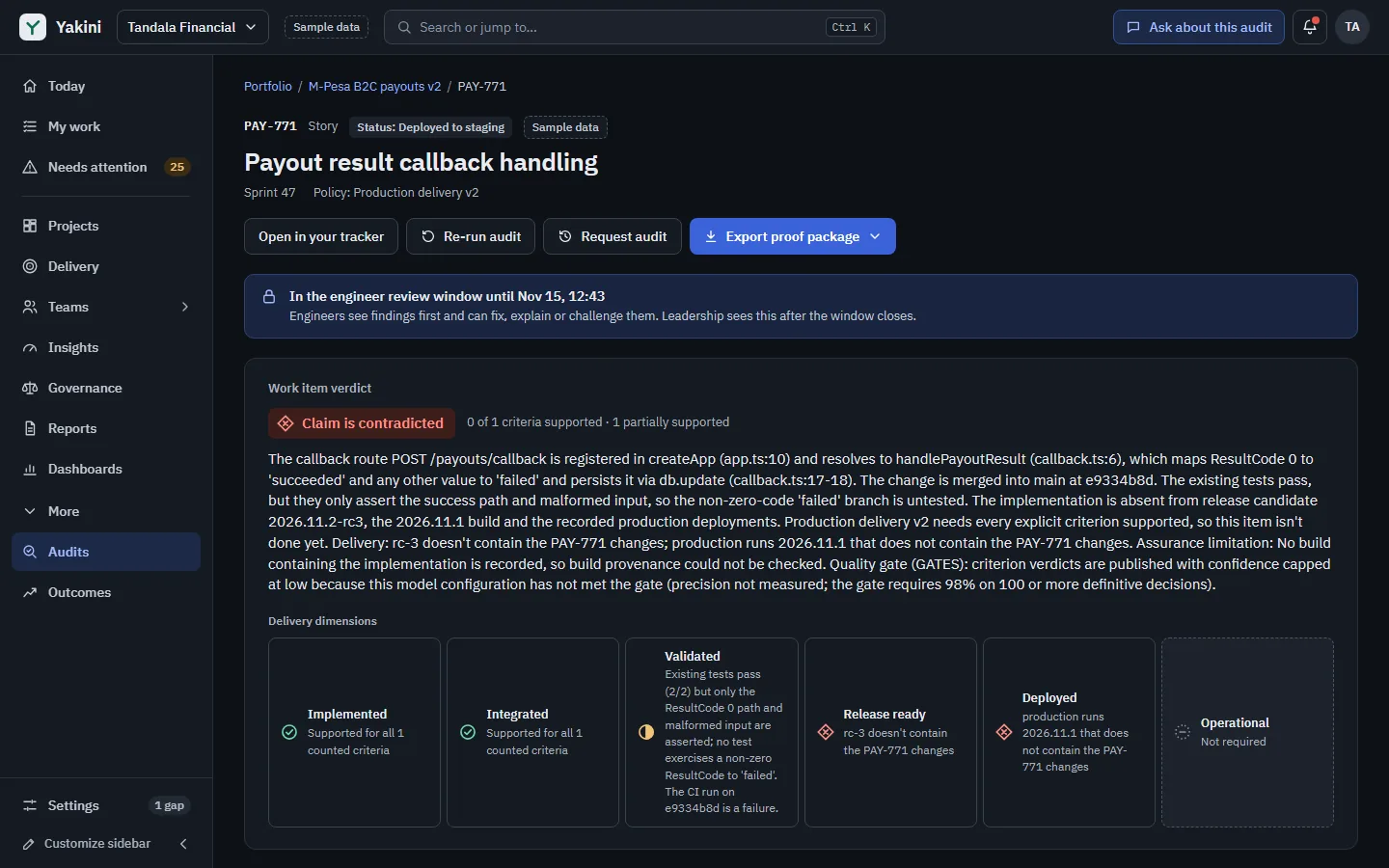
Your findings come to you first, privately, during the review window. Run a private self-check of a branch before you declare an item done, from Yakini or from VS Code, and follow the Path to Supported to see what is still missing. If a finding is wrong, challenge it with the evidence.
What you get
- Findings private to you during the review window
- Private self-checks of a branch, also from VS Code
- Path to Supported: what is missing, criterion by criterion
- Challenges reinvestigated with the evidence you point to
- My load and blockers, seen by others only if you share it
Release managers
Know what is in the release, and whether it is ready.
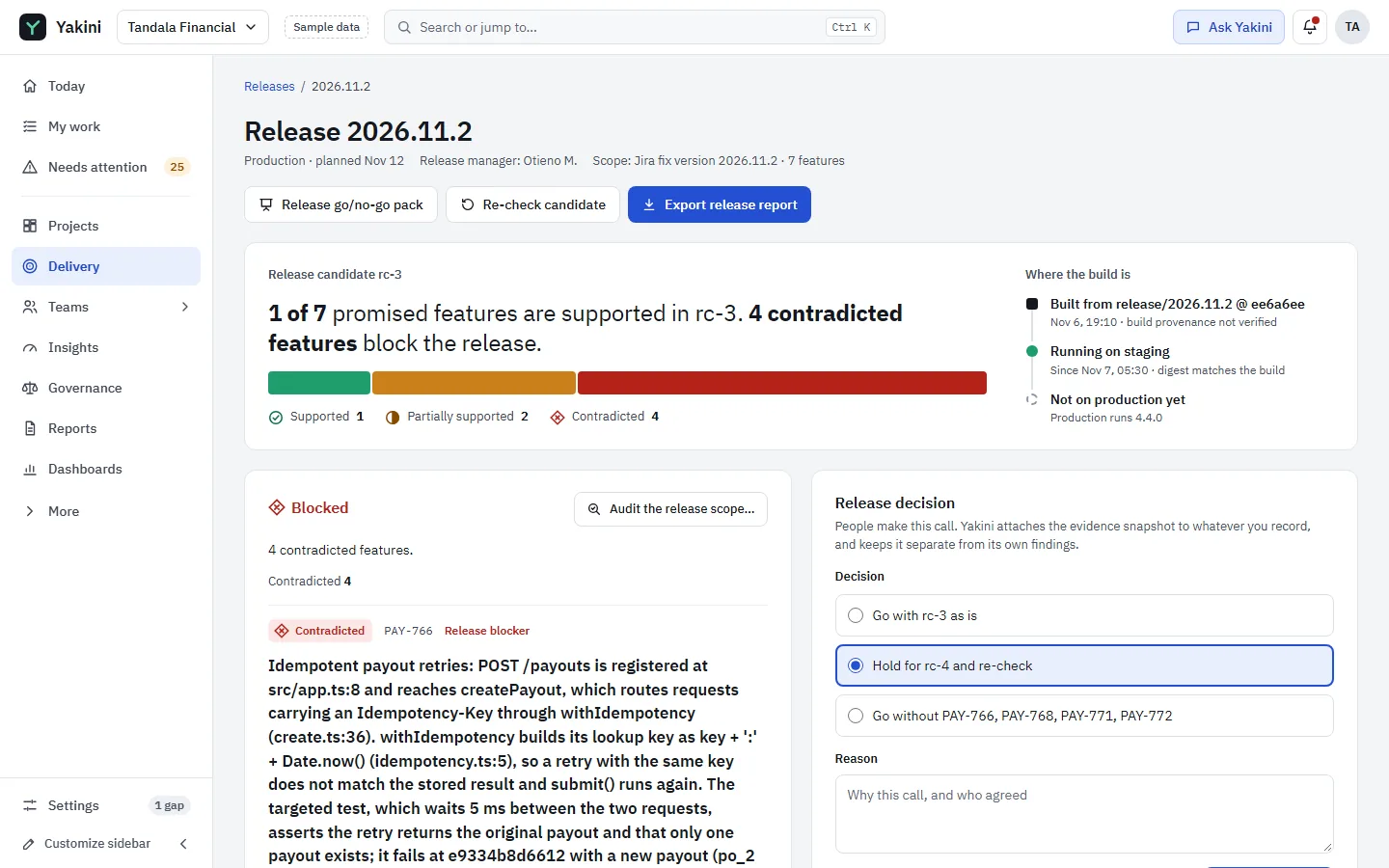
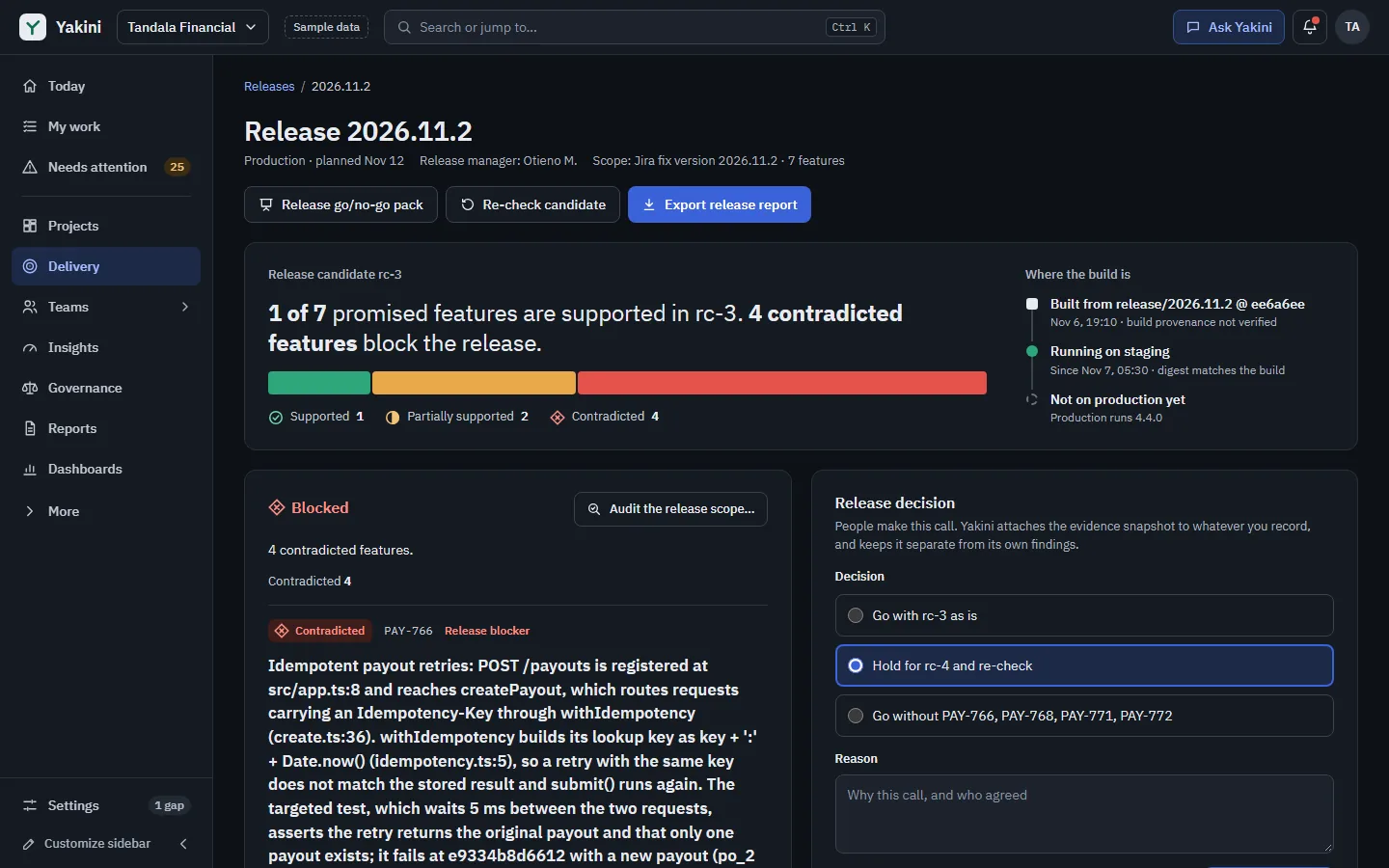
Release readiness lists every item in a candidate with its verdict and its delivery evidence: built, deployed, and switched on for the people it’s meant for. Items that haven’t been audited are counted, not left out.
What you get
- Every item in a release candidate, with its verdict
- Delivery evidence from builds, deployments and feature flags
- Unaudited scope counted, never hidden
- Go and no-go decisions recorded with a snapshot of the evidence
Project managers
Commitments you can stand behind.
See how each milestone, release and sprint stands, as on track, at risk, off track or not enough evidence, and why. Scope changes are logged as they happen, the roadmap shows progress by verified acceptance criteria, and stakeholder updates start from what was verified.
What you get
- Delivery confidence with the reasons behind it
- Scope-change log and commitment tracker
- Roadmap with verified progress beside the item counts
- Drafted stakeholder updates and release notes
- Definition of Ready: vague or missing criteria caught before work starts
Auditors and assurance reviewers
Every step of every audit, open to inspection.
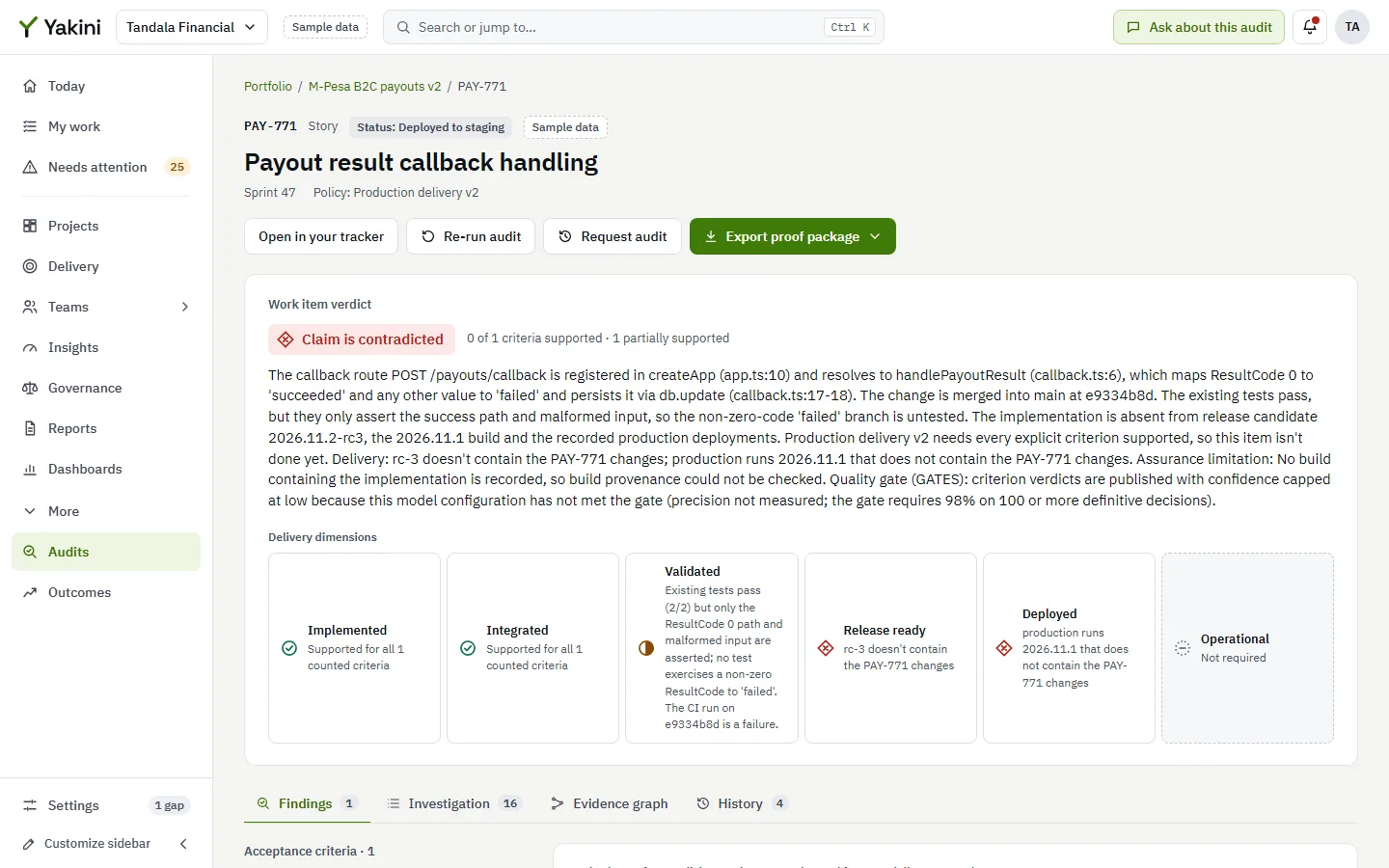
The audit workspace shows the plan, every step and tool call, the citations and the code they point to, execution traces, test runs and the challenge. Proof packages are signed, compliance packs gather the change-management evidence for a period, and the security log is hash-chained.
What you get
- The plan, steps and tool calls of each audit
- Citations, traces and tests, validated against the repository
- The independent challenge and its outcome
- Signed proof packages and compliance packs
- An append-only, hash-chained security log
See Yakini with your own questions.
We’ll walk you through Yakini with a sample organization, show the evidence behind each verdict, and answer your questions about deployment, security and models.
- Hosted, dedicated or self-hosted
- Your choice of models, self-hosted too
- Pricing set out in a written proposal